 Impact
 Blog
Blog Store Locator
 Subscription
ReneKey takeaways:
- Shampoo bars are concentrated (no water filler), so they clean with fewer, more active ingredients per wash than most liquid shampoos.
- One shampoo bar replaces roughly 3 bottles of liquid shampoo, which usually makes bars the better value over time.
- Liquid shampoo isn't "bad" — it's just diluted, heavier to ship, and packaged in plastic that can take centuries to break down.
- Bars win on ingredient concentration, waste, and travel convenience. Liquid wins on habit and instant lather for some users.
- Both formats can be formulated for specific hair types (fine, oily, dry, curly, color-treated) — format isn't the deciding factor, formulation is.
Shampoo Bar vs Liquid Shampoo: What's the Real Difference?
If you've typed "shampoo bar vs liquid shampoo" into Google, you're probably trying to figure out if switching is worth the hype — or the adjustment period. Short answer: the two formats aren't just different shapes of the same product. They're built differently, priced differently, and leave behind very different amounts of waste.
A liquid shampoo is mostly water — often around 80% of the bottle. The rest is surfactants, conditioning agents, and preservatives needed to keep a water-based formula stable. A shampoo bar skips the water entirely. It's the cleansing agents and active ingredients pressed into solid form, which is why bars are so concentrated: Ethique's bars pack in 10x more active ingredients than a typical liquid shampoo, gram for gram.
That single difference — water or no water — is what drives almost every other difference on this page: cost, packaging, shipping footprint, and how long a single product actually lasts you.
Shampoo Bar vs Liquid Shampoo: Quick Comparison
| Category | Shampoo Bar | Liquid Shampoo |
|---|---|---|
| Formula concentration | Concentrated, no water filler | ~80% water |
| Cost per wash | Lower — 1 bar ≈ 3 bottles | Higher over time |
| Packaging | Plastic-free, often compostable | Plastic bottle |
| Shelf life | Months, if kept dry between uses | Months to years, sealed |
| Travel-friendly | No liquid restrictions, no leaks | Subject to TSA liquid limits |
| Lather | Builds with hands after applying to hair | Lathers instantly in bottle or hands |
| Formulated for hair type | Yes — fine, oily, dry, curly, color-treated, scalp concerns | Yes — same range of options |
| Learning curve | Small adjustment for first few washes | None — familiar format |
Ingredients: Why Concentration Matters
Because a bar isn't diluted with water, every gram is doing more work. Ethique bars are formulated with plant-derived actives — coconut oil for nourishment, hydrolyzed rice protein for strength, and neem and karanja oils in scalp-focused formulas — without sulfates, parabens, or drying alcohols. In clinical testing, that concentration translated into 8x more hydration and 70% more shine after a single wash, plus a 5x reduction in breakage when used with a matching conditioner bar.
None of that means liquid shampoo is poorly made — plenty of liquid formulas are also sulfate-free and gentle. The difference is that a bar has to earn its performance in a smaller amount of product, so brands formulating bars tend to load them with active ingredients rather than filler.
Cost Per Wash: Which Format Actually Saves You Money?
A full-size shampoo bar lasts around 80 washes with regular use — roughly the equivalent of three 12 oz. bottles of liquid shampoo. Once you account for how few pumps of liquid actually reach your scalp versus how far a bar goes, bars typically come out ahead per wash, especially if you're buying quality, sulfate-free liquid shampoo at a similar price point per ounce.
Bars also travel well without needing a backup bottle for trips, which quietly saves money too — no more buying travel-size liquids you'll toss half-used at airport security.
Environmental Impact: The Packaging Problem
The beauty industry produces more than 120 billion units of plastic packaging every year, and most of it ends up in landfill or the ocean. A standard plastic shampoo bottle can take up to 450 years to decompose. Since you're also paying to ship a product that's mostly water, liquid shampoo carries a heavier shipping footprint per wash than a bar does.
Shampoo bars remove that packaging problem at the source. Ethique's bars come in home-compostable packaging, and the brand has kept more than 25 million plastic bottles out of landfill so far. If sustainability is part of why you're comparing formats in the first place, this is usually the deciding factor.
Convenience and Travel
Liquid shampoo has one clear advantage: familiarity. You know exactly how it works, and it lathers the instant it hits your hands. Shampoo bars ask for a slightly different motion — wet the bar and your hair, glide the bar directly onto your scalp, then work up a lather with your hands.
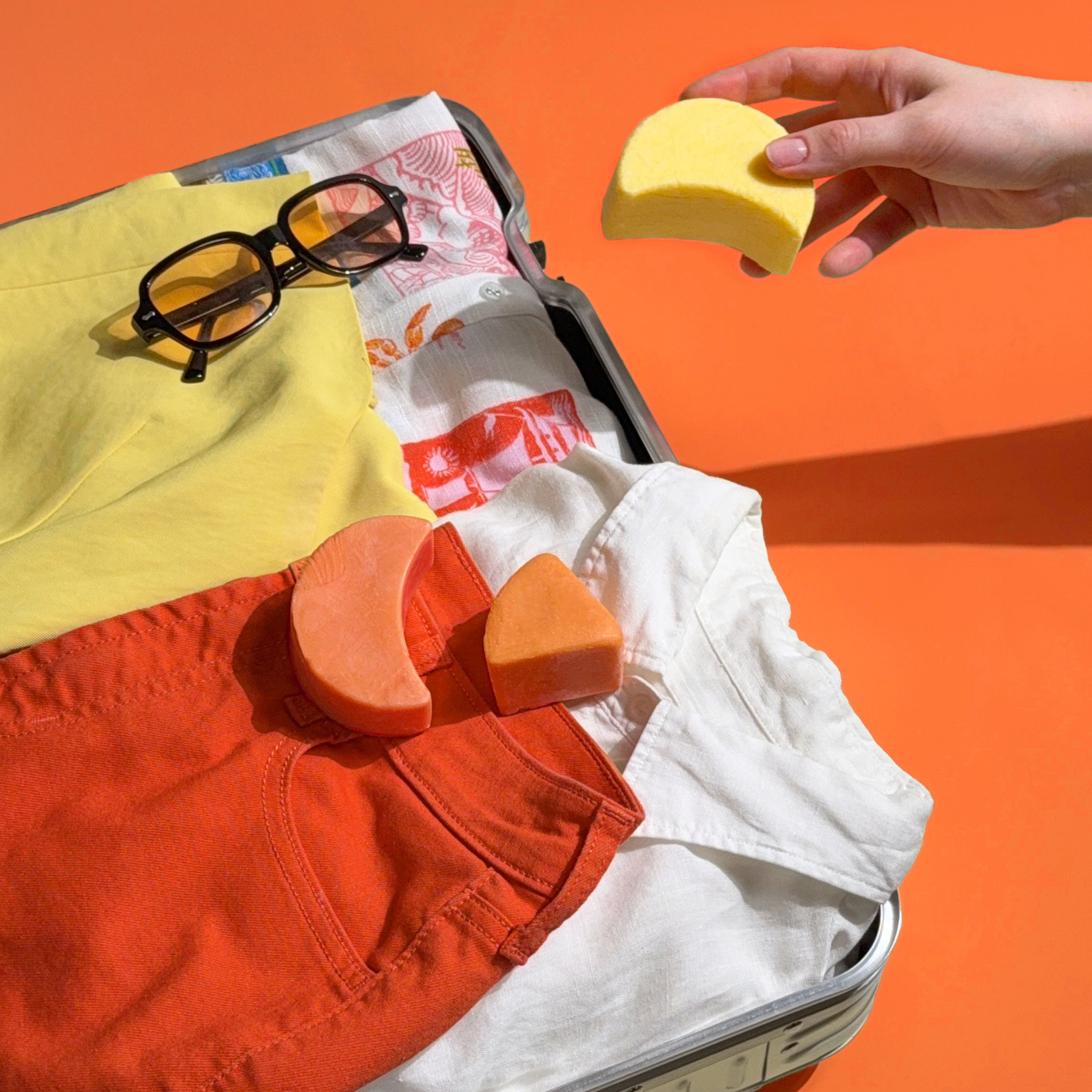
Where bars pull ahead is travel. No liquid restrictions, no leaks in your bag, no decanting into tiny bottles. A bar in a travel tin does the job of a bottle without the TSA math.
Does Hair Type Change the Answer?
Not really — format and formulation are two separate decisions. Both shampoo bars and liquid shampoo can be built for:
- Fine or flat hair that needs volume without weight
- Oily scalps that need a deeper, clarifying cleanse
- Dry or curly hair that needs extra moisture and slip
- Damaged or color-treated hair that needs a sulfate-free, protein-supported formula
- Sensitive scalps that react to fragrance or harsh surfactants
So the real question isn't "bar or bottle" for your hair type — it's whether you want that formula concentrated and plastic-free, or diluted and bottled.
How to Switch From Liquid to a Shampoo Bar
- Wet your hair thoroughly, then wet the bar itself.
- Glide the bar directly over your scalp, roots first, working toward the ends.
- Set the bar aside and lather with your hands like you would with liquid shampoo.
- Rinse thoroughly, then follow with a matching conditioner bar if needed.
- Store the bar somewhere it can fully air-dry between washes — a draining soap dish works well. Keeping it dry between uses is what makes a full-size bar last as long as it should.
Longer hair may need a few more passes over the bar than shorter hair — that's normal, and it doesn't mean the bar is underperforming.
Frequently Asked Questions
Are shampoo bars better than liquid shampoo?
For most people, yes, on the metrics that matter most: shampoo bars are more concentrated, produce zero plastic waste, and typically cost less per wash than liquid shampoo. Liquid shampoo's main advantage is familiarity — there's no adjustment period. If you're comparing performance, value, and environmental impact, bars generally come out ahead.
Shampoo bar vs bottle — which lasts longer?
A full-size shampoo bar lasts about as long as three bottles of liquid shampoo, provided it's stored dry between washes. Leaving a bar sitting in water will shorten its lifespan, so a well-draining soap dish makes a noticeable difference.
Do shampoo bars work as well as liquid shampoo?
Yes, when formulated correctly. A shampoo bar is not the same thing as a bar of soap — soap is made through saponification and is alkaline, which can leave hair dull or tangled. A true shampoo bar uses the same gentle, pH-balanced surfactants as liquid shampoo, just without the water.
Are shampoo bars good for color-treated or damaged hair?
Yes, as long as the bar is sulfate-free. Sulfates are what strip color and moisture fastest, regardless of format. Look for a bar formulated specifically for damaged or color-treated hair, ideally paired with a matching conditioner bar.
How long does one shampoo bar actually last?
A full-size bar typically lasts around 80 washes, or two to three months of regular use, depending on hair length and thickness. Longer hair uses up a bar faster since it needs more passes per wash.
Which Format Is Right for You?
If you're happy with your current liquid shampoo and it's already sulfate-free and well-formulated for your hair, there's no urgent reason to switch. But if you're paying for a bottle that's mostly water, replacing plastic packaging every few months, or just want more active ingredients doing more work per wash — a shampoo bar is the upgrade.
Not sure which formula fits your hair? Browse the full shampoo and conditioner bar range to find the one built for your hair type and concerns.
Ready to build your own routine? Mix and match a shampoo bar, conditioner bar, and more with the Build Your Own Bundle tool and save up to 20% when you bundle.