 Impact
 Blog
Blog Store Locator
 Subscription
If you've ever switched to a shampoo bar and found your hair feeling waxy, heavy, or just… not quite right, hard water is usually the first thing people point to. And honestly, we get why...hard water has a reputation. But here's the thing: for Ethique bars specifically, hard water is far less of a problem than most people fear.
Let's get into exactly what's going on, why some shampoo bars struggle in hard water (hint: it's not ours), and what to do if your hair still isn't feeling its best after the switch.
What is hard water, exactly?
Hard water is water with a higher concentration of dissolved minerals, mainly calcium and magnesium. As rainwater travels through rock and soil, it picks up these minerals along the way. The more it collects, the harder the water becomes.
If you've noticed limescale building up on your taps, showerhead, or kettle, that's hard water leaving its mark. According to the US Geological Survey, around 85% of homes in the United States have hard water, so if that's you, you're in very good (very mineral-rich) company.
Hard water is completely safe to use and drink. The issue is what it does to certain hair and body products, specifically soap-based ones. Want a deeper dive into what hard water is and how it interacts with Ethique products? We've covered the basics in our post: What is hard water and does it impact Ethique bars?

Why do some shampoo bars struggle in hard water?
Not all shampoo bars are created equal and this is the part that trips a lot of people up.
Many bars on the market are soap-based, meaning they're made by combining oils with an alkali (like sodium hydroxide). When soap meets the minerals in hard water, it becomes less soluble. The result? Poor lather, and a residue that can leave hair feeling coated and dull.
Ethique shampoo bars are different. They're surfactant-based, not soap which means they're formulated with the same cleansing ingredients you'd find in a premium liquid shampoo, just in concentrated solid form. Surfactants don't react the same way with hard water minerals, so lather, performance, and rinse are not affected.
If you've tried a shampoo bar in the past that turned into a waxy nightmare in hard water, there's a good chance it was a soap bar masquerading as a shampoo bar. Ours? Not the case.
So why might my bar still be leaving residue?
Great question and a really common one. If you're in a hard water area and your hair is feeling heavy or coated after switching to a shampoo bar, here are the most likely culprits:
1. Too much product
Shampoo bars are highly concentrated, one bar is the equivalent of three 350ml bottles of liquid shampoo. It doesn't take much. If you're applying the bar the same way you'd pour out a liquid shampoo, you're likely using more than you need. Try fewer swipes (3–4 from root to tip is usually plenty) and see if that makes a difference.
2. The transition period
Your scalp has spent years in a relationship with liquid shampoo. Switching to a bar can sometimes trigger a short adjustment phase where your hair produces more oil than usual, or feels different in texture. This typically settles within 2–4 weeks. Stick with it, most people come out the other side with the best hair of their lives.
3. Product buildup from previous haircare
If you've been using silicone-heavy conditioners or styling products, those can linger on the hair shaft and cause a waxy feeling that gets blamed on the shampoo bar. A clarifying wash (our Clarifying set is great for this) can help reset things.
4. Not rinsing thoroughly enough
Hard water can make rinsing feel less satisfying than soft water there's less of that squeaky-clean sensation. Make sure you're rinsing until the water runs completely clear and spending a few extra seconds at the roots.
Tips for getting the best results with a shampoo bar in hard water
A few small adjustments can make a big difference:
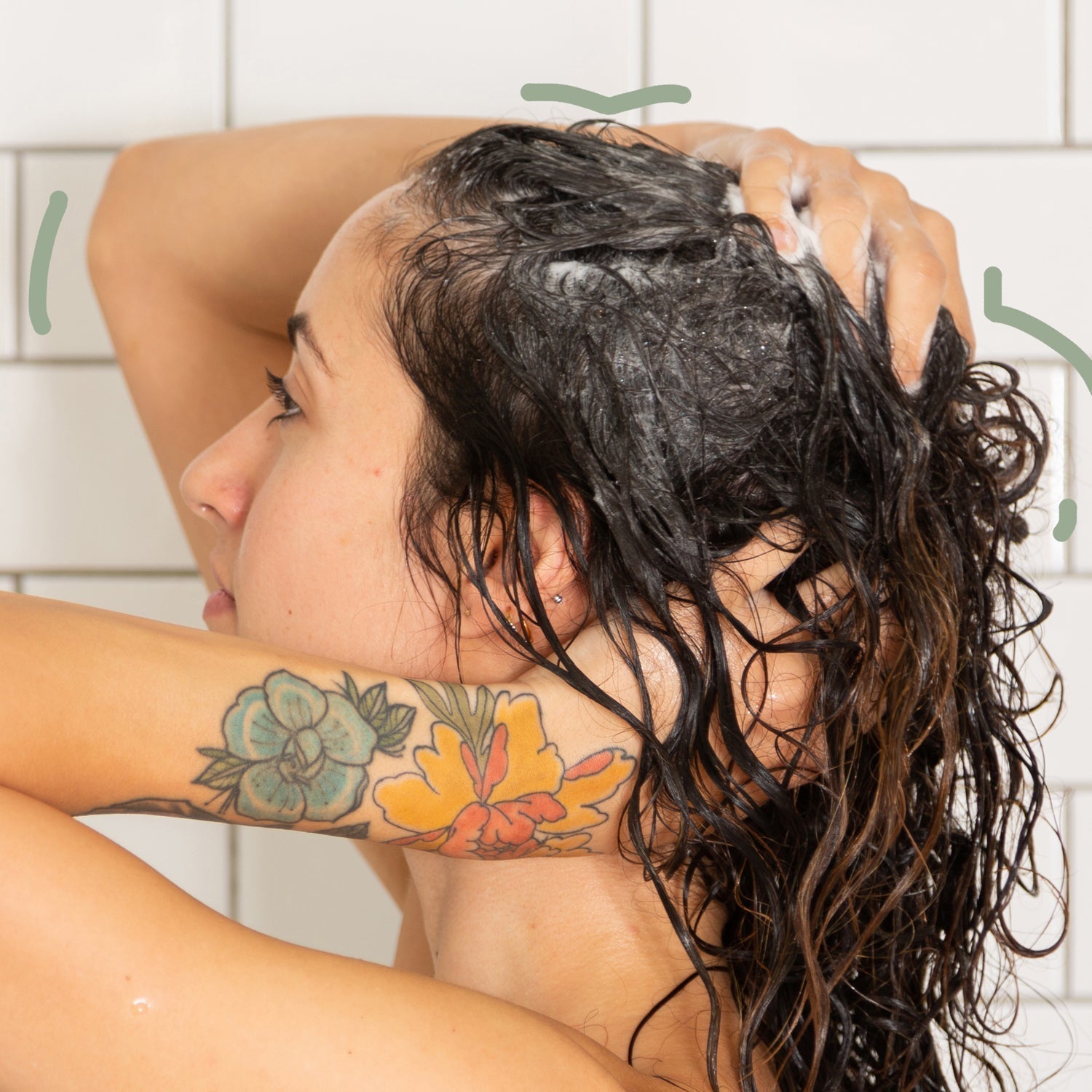
- Apply directly to your hair, not your hands. Lathering the bar between your palms means the surfactants bind with the oils on your hands rather than your scalp. Swipe directly onto wet hair at the roots for a more effective cleanse.
- Use a conditioner bar every wash. Hard water can leave hair feeling drier or rougher than soft water. A good conditioner bar replenishes moisture and helps the cuticle lie flat. Our Hydrating Conditioner Bar is a firm favorite for anyone dealing with dry or hard-water-stressed hair.
- Try a weekly apple cider vinegar rinse. Dilute 1–2 tablespoons of ACV in a cup of water and pour over your hair after shampooing, before your conditioner. It helps remove any mineral buildup and restores shine. Your hair will thank you; your shower will smell briefly like a salad. Worth it.
- Store your bar properly. Hard water can soften your bar faster if it's sitting in a pool of water between uses. A draining soap dish or one of our bar storage containers keeps it dry and lasting longer

Our pick for hard water hair
If hard water is leaving your hair feeling dry or in need of extra moisture, our Hydrating Shampoo Bar and Hydrating Conditioner Bar are your new best friends. The shampoo bar gently cleanses without stripping it's been with us since day one, and it's a bestseller for a reason. Pair it with the conditioner bar and your hair gets a serious dose of softness and moisture back.
Grab them together as the Hydrating Shampoo & Conditioner Full Size Duo and save it's the easiest way to set yourself up with a complete hard-water-friendly routine.
Or if you want to mix and match based on your specific hair needs maybe you want a clarifying shampoo paired with a hydrating conditioner, or you've got two different hair types in your household our Bundle Builder lets you build your own set and save up to 20%. Pick what works for your hair, your water, your life.

Frequently asked questions
Do shampoo bars work in hard water?
Soap-based shampoo bars can struggle in hard water because the minerals reduce lather and cause residue. Surfactant-based shampoo bars, like all Ethique bars, are not affected by hard water and lather and cleanse normally.
Why is my shampoo bar leaving residue?
The most common causes are using too much product, a brief transition period when switching from liquid shampoo, buildup from previous silicone-based products, or not rinsing thoroughly. Hard water alone is rarely the culprit if you're using a soap-free bar.
Are Ethique shampoo bars soap-free?
Yes. All Ethique shampoo bars, conditioner bars, and facial cleansers are 100% soap-free and surfactant-based. This is what makes them hard-water friendly.
How do I know if I have hard water?
Limescale on taps, showerheads, and kettles is the most visible sign. You might also notice soap products lathering less than expected, or a film left on skin after washing. Around 85% of US homes have some degree of hard water.
What's the best shampoo bar for hard water?
Any Ethique shampoo bar will perform well in hard water. If hard water is also leaving your hair feeling dry or rough, the Hydrating Shampoo & Conditioner Duo is a great starting point for adding moisture back into your routine.
Does hard water cause hair loss or damage?
Hard water doesn't cause hair loss, but over time mineral buildup can make hair feel drier, more brittle, and harder to manage. Using a moisturising conditioner bar regularly and doing an occasional ACV rinse helps counteract this.
Can I use an apple cider vinegar rinse with Ethique bars?
Yes, it's actually a great combination in hard water areas. A diluted ACV rinse (1–2 tablespoons in a cup of water) after shampooing helps remove mineral buildup, restore shine, and balance the scalp. Follow with a conditioner bar.